

The exports of Pakistan have not been able to increase exponentially in the last 20 years and have stagnated at 25-35 billion dollars in exports annually, while their regional rivals like Bangladesh and Vietnam have surged ahead. Despite repeated government declarations that export-led growth is key to economic revival, structural, policy, and cost-related challenges have kept the country’s trade performance subdued.
Export Decline and Trade Deficit
The trend is declining, according to recent statistics. The trade gap was further worse in December 2025 when imports reached $6 billion while exports fell 20.41 percent year over year to $2.32 billion. The exports of textiles, which are the main pillar of the Pakistani economy, fell by 9 percent, and food and agricultural exports decreased 35 percent during the first half of FY 2025-26. The current downward trend highlights the pressure that is building up on exporters who are blaming the high energy costs, poor logistics, and policy inconsistencies as major limitations. The growth of services exports has been modest and has not been able to cover the imbalance of the total trade.
Key Barriers to Export Growth
Several recurring challenges limit Pakistan’s export potential:
- High and Volatile Energy Costs: Industrial electricity and gas tariffs are above regional benchmarks and subject to frequent changes, inflating production costs and undermining competitiveness. The textile industry, in particular, struggles to run captive power plants economically.
- Complex Taxation and Policy Uncertainty: Exporters face advance taxes, turnover taxes, and delayed refunds, tying up working capital and increasing borrowing costs. Frequent changes in tax rates, export incentives, and energy pricing have weakened investor confidence.
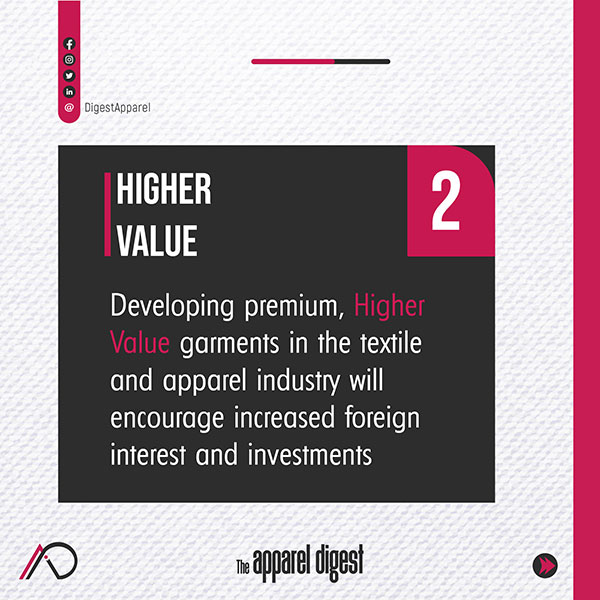
- Low Value-Added Export Base: Pakistan’s exports remain concentrated in low-margin textiles, yarn, and basic garments. Other industries such as the higher value apparel, the horticulture, livestock, seafood, minerals and IT services are not well developed.
- Infrastructure and Logistics Gaps: Insufficient testing facilities, limited cold-chain infrastructure, high freight costs, and inadequate export terminals restrict scalability.
- Skills and Productivity Shortfalls: Shortages of technical, managerial, and digital skills, combined with low productivity and unreliable energy supply, hinder the country’s ability to move up the value chain.
- Protectionism and Input Costs: High tariffs, ad-hoc import restrictions, and dependence on domestic margins discourage firms from competing globally.

Government Initiatives and Strategic Plans
Recognizing these challenges, the government has initiated several measures to revitalize exports:
- Task Forces and High-Level Committees:
- A task force chaired by Planning Minister Ahsan Iqbal identified structural reforms, including tariff rationalisation, energy cost adjustments, and easing the cost of doing business, as essential for export-led growth.
- A high-level “export emergency” committee, chaired by Deputy Prime Minister Ishaq Dar, is analyzing the plans to increase the export to $60 billion in four years.
- Support for Exporters and SMEs:
- Measures include faster tax refund mechanisms, support for top 200 exporters, access to affordable finance, streamlined processes for special economic zones, and facilitation of raw material sourcing.
- Economic diplomacy and engagement of the Pakistani diaspora are also being promoted to expand markets and investment.
- Policy and Infrastructure Reforms:
- Rationalizing electricity and gas tariffs, strengthening testing and certification mechanisms, developing cold chains for perishables, and improving port infrastructure are among the proposed interventions.
- To increase investor confidence, the government seeks to decrease the number of procedural bottlenecks and ensure consistent, predictable policies.

The Road Ahead
Pakistan’s path to export-led growth requires a holistic approach addressing both macroeconomic stability and micro-level operational hurdles. Analysts emphasize that temporary incentives, episodic devaluations, or protectionist measures alone cannot achieve ambitious targets. Sustained investment in skills, productivity, value-added diversification, and global competitiveness will be critical.
Since the export is now close to the levels at $ 30-35 billion, the government is aiming to reach the target of above 60 billion in the next few years, and this is a definite move to an export-led economic model. The key to success will be consistency in the policies, low-cost energy, building infrastructure, and involvement of the active role of the private-sector to change the trade environment in Pakistan.