The Apparel Digest Report

On 27 January 2026, India and the European Union (EU) concluded a landmark free trade agreement (FTA), hailed in New Delhi as the “mother of all deals.” The agreement removes or drastically lowers tariffs on more than 96 percent of Indian export to the EU such as textile, apparel, leather, and footwear. In the case of India, this will give it a permanent preferential treatment of its biggest European market with a well-established, vertically integrated supply chain, reliable energy, modern logistics, and a network of trade agreements in various markets.
The upcoming India-EU Free Trade Agreement (FTA), expected in 2027, will grant Indian apparel duty-free access (0% tariff) to the EU, eroding Bangladesh’s competitive advantage. As Bangladesh approaches LDC graduation, this shift threatens its 50% export share to the EU, allowing India to capture market share through its superior raw material base
The implications are far reaching in the case of Bangladesh. Its export economy is heavily concentrated in apparel and footwear, sectors that account for 85–94% of exports to the EU. Historically, Bangladesh had a competitive advantage as a Least Developed Country (LDC) in the Everything But Arms scheme of duty-free access, compared to countries such as India, which had to pay 9-17% in tariffs. The EU-India FTA eliminates this cushion so that Indian exporters can compete on even terms of tariff playing field whilst Bangladesh is experiencing the looming tariff cliff following its LDC graduation in November of 2026. Unless Bangladesh secures GSP+ or a similar arrangement, post-2029 duties could rise to 12%, effectively creating a 24% price disadvantage relative to India.
The competitive challenge extends beyond tariffs. India’s integrated supply chain allows faster, more predictable production, while Bangladesh remains reliant on imported raw materials and faces frequent energy and port disruptions. The political stability and predictability of the regulations also leans the buyer preference to India. Meanwhile, India’s domestic policies, including targeted textile incentives and export missions, accelerate capacity building and value addition. The recent US–India trade deal compounds the pressure, offering Indian exporters improved access to another of Bangladesh’s key markets.
Bangladesh’s vulnerability is heightened by its concentrated export base and reliance on a single market. According to modeling estimates, the EU-India FTA with post-LDC tariff exposure would reduce the exports of Bangladesh garment products by billions of dollars and cause a massive order diversion without mitigation measures. Even partial market loss would cascade through the sector, increasing price competition and risking factory closures.
Industry leaders emphasize that Bangladesh retains critical strengths: large, organized, and globally compliant factories; sustainability credentials; and experience in high-volume production. Survival and growth will depend on leveraging these advantages while addressing structural weaknesses. Priority actions include:
- Securing market access: GSP+ eligibility and negotiation of preferential arrangements with non-traditional markets to diversify export destinations.
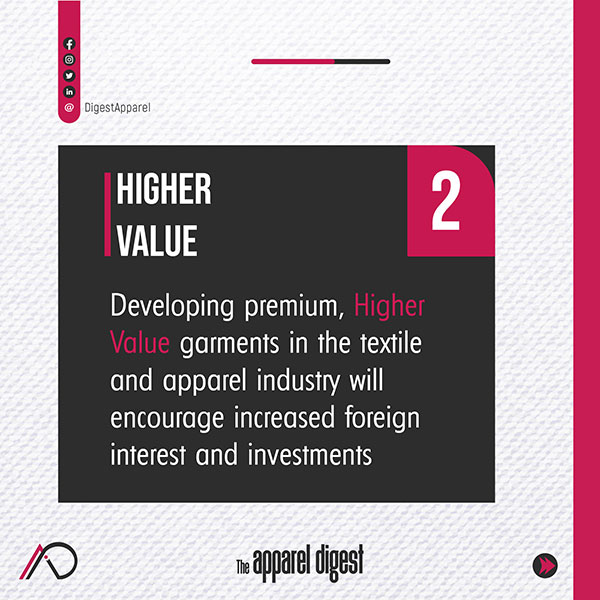
- Enhancing competitiveness: Investment in man-made fibers, value addition, product diversification, design capabilities, and high-end manufacturing.
- Improving infrastructure and logistics: Energy reliability, port efficiency, and streamlined customs to reduce lead times and transaction costs.
- Sustainability and compliance: Strengthening green energy adoption, traceability, and adherence to EU due diligence and environmental standards to maintain buyer confidence.
- Attracting investment: Promoting foreign direct investment in key export-oriented sectors to scale production and upgrade capabilities.
With the EU and India free trade agreement (FTA), Bangladesh’s garment exports post-LDC graduation appear increasingly vulnerable. Once the EU-India deal comes into effect in 2027, Indian apparel will start enjoying zero percent tariffs in the EU market, down from the current 9-12 percent. In other words, Bangladesh’s competitive edge of duty-free access for garment products to Europe is set to disappear.
Currently, Bangladesh enjoys LDC preferential treatment in the EU, paying zero tariffs on its garment exports. Leveraging this benefit, Bangladesh has been able to expand its share in the EU’s apparel market, its top destination for RMG exports. Garment exports to the EU accounted for 50.10 percent of the country’s total apparel shipments in FY 2024-2025, followed by 19.18 percent to the US. However, this advantage will not last. After its LDC graduation in November this year, Bangladeshi apparel can retain duty-free access to the EU market only for three more years. Unless a successor trade arrangement is secured, it may face tariffs as high as 12 percent. In such a scenario, RMG exports may fall by around 16 percent, according to experts.
The EU–India FTA signals a new South Asia–Europe trade hierarchy. Bangladesh that achieved its export fortunes on favorable terms and disciplined industrial strategies are now placed upon the structural test: to stand on its own, without tariff favors, but on the basis of productivity, sustainability, diversification, and strategic policy support Immediate action is critical; the window to secure GSP+ status, enhance competitiveness, and defend market share is narrow, and delays could result in lasting losses in Bangladesh’s most important export markets.