The Apparel Digest Report


Federal Republic of Nigeria, the most populous African nation located in West Africa between the Sahel to the north and the Gulf of Guinea in the Atlantic Ocean to the south, has an area of 923,769 square kilometres with more than 230 million populations. It is the world’s sixth-most populous country with capital in Abuja but the largest city is Lagos. With more than 250 ethnic groups speaking 500 distinct languages, Nigeria is truly a multinational state that chosen English as the official language. Nigeria’s economy with a GDP of roughly $253 billion in 2024, heavily reliant on oil but with growth in services, agriculture, and telecommunications. Nigeria is a regional power in Africa and a middle power in international affairs.
Nigeria’s textile industry has seen better days. In the 1980s, it stood as one of the largest in Africa, employing over 750,000 workers and contributing nearly 25% to the country’s manufacturing GDP. Industrial hubs such as Kaduna, Kano, and Lagos thrived with textile mills and garment factories, while cotton farming flourished across 34 northern states, supporting millions of rural livelihoods.
However, beginning in the late 1980s and continuing through the 1990s, the industry began a steady decline. A combination of government neglect, mismanagement, and distorted industrial priorities due to the oil boom undermined the sector. Rising insecurity in farming areas disrupted cotton production, while cheap, imported fabrics flooded Nigerian markets, undercutting local manufacturers.
By the early 2000s, most textile mills had shut down, turning what was once Africa’s textile powerhouse into a shadow of its former self. Today, Chellco Industries remains one of the few surviving textile companies — a lone figure amidst a landscape of collapsed giants.


Government Interventions and Recent Developments
In response to the sector’s decline, the Nigerian government established the Cotton, Textile, and Garment (CTG) Development Board. This initiative is financed through levies on imported textiles and supported by stakeholder associations across Nigeria’s six geopolitical zones, in coordination with relevant federal ministries. The Board’s mission is to retool, modernize, and restore the global competitiveness of Nigeria’s textile sector by boosting productivity and innovation.
The government is also spearheading the creation of industrial textile clusters in key states including Lagos, Abia, Kano, and Ogun, aimed at building shared infrastructure and economies of scale for textile and garment producers.
The Current Landscape
At the informal and small-scale level, Nigeria’s apparel industry remains vibrant. Cities like Lagos, Aba, and Kano are teeming with skilled tailors and fashion entrepreneurs producing garments for the local market. However, at the industrial scale, the country still lacks garment factories capable of producing high-volume, export-ready clothing or fulfilling large institutional orders, such as uniforms for schools, corporations, or security forces.
Nigeria currently imports billions of naira worth of clothing and fabrics annually. The retail market is saturated with smuggled, counterfeit, and low-quality imported garments, particularly from Asia, further weakening local capacity. This has created a paradox: soaring domestic demand meets low domestic supply, leaving a vast market gap.
Key Growth Drivers
Several emerging trends offer hope for the revival of the sector:
- The African Continental Free Trade Area (AfCFTA): This trade agreement provides Nigerian textile and garment producers with access to a 1.3 billion-person market across Africa. With proper positioning, Nigeria can leverage AfCFTA to become a regional export hub.
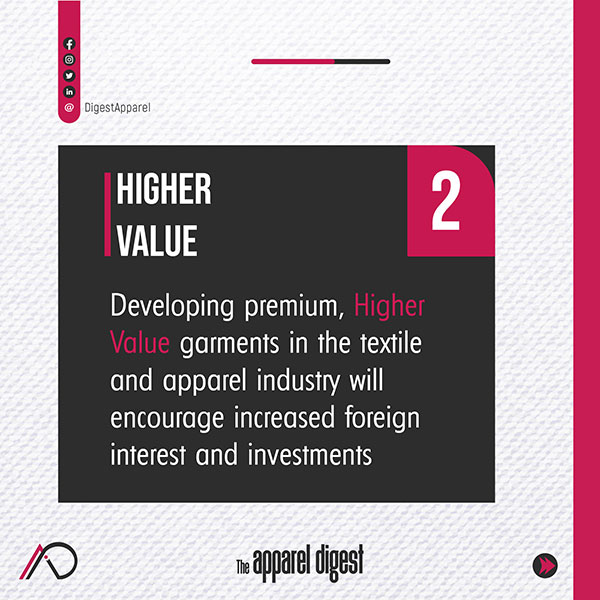
- Performance Fabric Market: Demand for durable, functional fabrics — especially for sportswear, uniforms, and workwear — is growing. This niche presents an opportunity for local innovation and high-value production.
- Sustainability and Tech-Enhanced Textiles: Globally, the shift toward eco-friendly and smart textiles is reshaping the industry. Nigeria can tap into these trends with proper investment and innovation.

Challenges Facing the Industry
Despite these opportunities, several deep-rooted challenges persist:
- Collapse of Local Cotton Supply: Insecurity in rural areas, lack of support for farmers, and outdated infrastructure have crippled domestic cotton production, making the industry heavily reliant on imports.
- High Production Costs: Erratic power supply, expensive inputs, and poor logistics significantly increase production costs, making local textiles uncompetitive compared to cheaper imports.
- Import Dependence: The unchecked influx of smuggled garments and cheap Asian textiles erodes demand for local products.
- Fragmentation: While Nigeria boasts thousands of talented tailors, they often operate independently, lacking the scale, training, or infrastructure to handle large orders or participate in organized value chains.
- Technology and Skills Gap: Obsolete machinery, limited access to financing, and a shortage of skilled labor continue to stifle industrial modernization.
Import of Chinese Cheap, Mostly Copied Garments – Threat to Nigerian Textile Industry

Nigeria’s textile production was once a vibrant, booming sector and a key part of its economy. But the industry has since been brought to its knees by cheap imports from China.
In the 1990s, the textile industry in Nigeria was a key driver of the economy, providing employment to hundreds of thousands in Africa’s most populous country. It was full of activities, from Kaduna, Kano, Lagos and Onitsha, textile factories were located in all those places. Textile mills across the country produced high-quality fabrics for Nigerian buyers as well as international markets. Booming production chains also supported local cotton farmers. Today, however, only a few factories remain, and even those are struggling amid the influx of cheap textiles from abroad — particularly from China.
Why are Chinese fabrics so much cheaper? Nigeria still boasts domestic cotton farms. However, its textile manufacturers need to procure dye, chemicals, starch and synthetic fibers from other countries. In contrast, China’s textile industry benefits from an integrated supply chain, where all the necessary goods and even machinery are available domestically.
Another obstacle for Nigeria’s textile industry is the depreciation of the country’s currency, the naira. Also it is alleged that imported textiles are often made of polyester rather than cotton. Polyester is cheaper, but is also considered lower in quality.

Emerging Opportunities
- CTG Development Board: With funding through a textile import levy, the board is tasked with increasing local production, reducing import dependence, and generating employment across the country.
- $2 Billion Textile Plant in Ogun State: Led by Arise Integrated Industrial Platforms (Arise IIP), this mega facility is expected to produce 350,000 metric tons of garments annually and create 150,000 jobs.
- Afreximbank’s $5 Billion Integrated Textile Hub: In partnership with Arise IIP, this initiative aims to cut Nigeria’s textile imports by $4.7 billion per year and generate over 250,000 jobs by establishing a fully integrated production ecosystem.
- Domestic Market Potential:
- School uniforms: Currently worth over $800 million annually.
- Corporate uniforms: Estimated at $1.2 billion.
- Hospitality garments: Valued at $500 million.
- These segments alone present a multi-billion dollar opportunity for local manufacturers.
- Garment Clusters: Organizing tailors and small producers into formal clusters with shared facilities and supply chains could significantly boost productivity while preserving Nigeria’s artisanal strengths.
- Technology Adoption and Digital Platforms: Investing in digital design tools, e-commerce, and online marketplaces could help Nigerian designers reach global audiences and tap into the $1.5 trillion global fashion industry.

The Road Ahead
The Nigerian apparel and textile industry stands at a crossroads. It can either continue to decline under the weight of unresolved challenges, or it can seize this moment of reform and become a global player. With Africa’s second-largest population, a rich cultural identity, and a strong entrepreneurial base, Nigeria is well-positioned to lead the continent’s fashion and textile revolution.
Achieving this, however, requires a coordinated strategy involving:
- Targeted government policies
- Private sector investment
- Infrastructure development
- Skills training and workforce development
- Anti-smuggling enforcement
- Incentives for local production


The story of Nigeria’s textile industry mirrors the nation’s broader economic journey — one marked by potential, decline, resilience, and rebirth. From the collapse of major mills to the grassroots rise of street tailoring, and from the smuggling of cheap imports to billion-dollar industrial hubs, the industry reflects both the challenges of African industrialization and the promise of transformation.
With the right focus, Nigeria has the potential to rebuild its textile legacy, develop a globally competitive apparel industry, and become not just a cultural powerhouse, but an economic engine for job creation, innovation, and export revenue.
The window for bold action is now. If missed, it risks relegating the industry to yet another chapter in the long list of Nigeria’s missed opportunities.