Open your wardrobe. Push past the shirts, the polos, the piles of clothes stacked too close together. And there, you will find it… the panjabi you bought last Pahela Boishakh. Folded neatly, and hidden between twenty others, still crisp, because it waits for that one special day. Maybe once. Maybe not at all since the day you bought it.
We buy clothes like this often. Excited in the moment, guilty in hindsight. But here’s the real cost; that Tk 3,000 Pahela Boishakh panjabi, worn once, cost you Tk 3,000 per wear. Meanwhile, the same-priced basic white panjabi you own and have worn more than fifty times cost just Tk 60 per wear. This is Cost per Wear (CPW), a truth that changes how we see every garment.
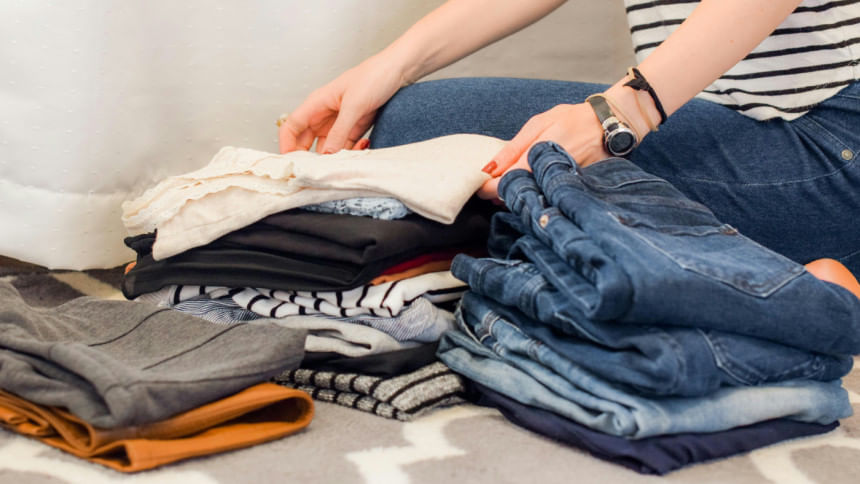
Photo: Collected / Sarah Brown / Unsplash
How to purchase with CPW in mind?
The best purchases are rarely the most exciting at first glance. The idea is to avoid clothes that stand out too loudly. It may sound strange, but that is the beauty. Before purchasing, ask yourself; can I wear this in multiple settings? Can I repeat it several times a month? Will it be still relevant after five years? Take that white panjabi, for example. If made from Egyptian cotton with a subtle printed pattern, it might feel too plain in the store. But once inside your wardrobe, it becomes the easiest choice. You reach for it on Jummah, at a family dawat, a gaye holud, and even on Pahela Boishakh. Each repeat lowers its CPW and raises its true worth.
Or, think about a pair of classic black Oxford shoes. They do not grab your attention on the shelf, but they will carry you through weddings, job interviews, office meetings, and formal dinners for years. Every scuff makes them richer, not weaker. That is what CPW looks like in action.

This is why knowing your style matters. Moving with every trend is like changing your personality with every setting you belong to. But when you know what truly suits you, consistency becomes your signature. People do not see repetition, they see identity.
Now here is the irony. The more you buy, the less joy you feel. It is the law of diminishing marginal utility. Shopping becomes routine and the thrill fades. But when you buy less and buy with intention, every purchase feels meaningful. You value the garment more. You remember where you wore it, who you were with, and the moments it carries with it.
We see this in life all the time. A girl wearing her mother’s saree to a wedding. A young man walking into his first interview wearing his grandfather’s silk tie, old but still relevant. These are not clothes. They are stitched memories, carrying stories that still walk with us. And their CPW is priceless.

Cost per Wear starts with math, but it ends with meaning. It saves money. It builds character. And it restores the joy of buying. The goal is not to own more, but to own better. To choose the garments that will not only work today but stand with you for decades.
Because one day, when your child wears your blazer or that scarf you loved for years, they will not just inherit clothing. They will inherit your story. And that is a value no receipt will ever capture, only the heart will.
The writer is Founder & CEO of Gentleman’s Wardrobe
Photo: Courtesy